

We are committed to providing clear and meaningful success rate data. Our IVF outcomes are reported through the Society for Assisted Reproductive Technology (SART), a trusted national standard.
These data are intended to provide patients with a more relevant view of outcomes based on current clinical practice. Individual results may vary, and we encourage patients to discuss their specific circumstances with our care team.
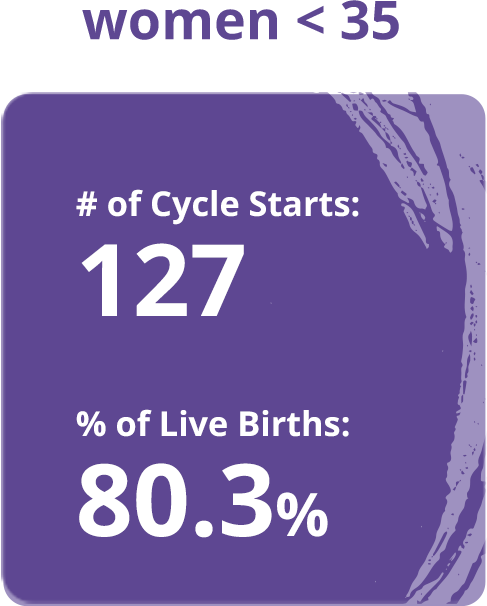
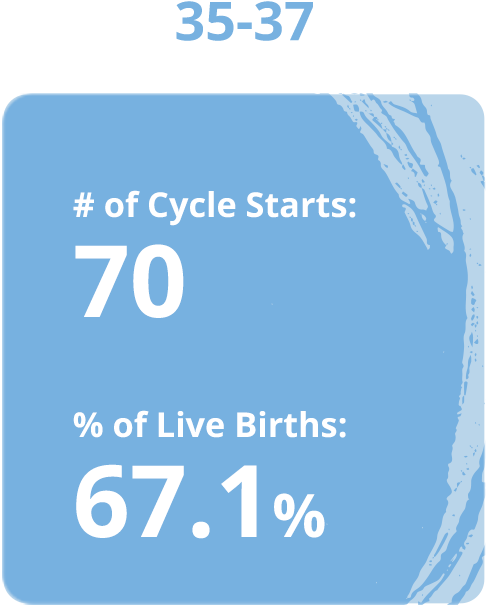
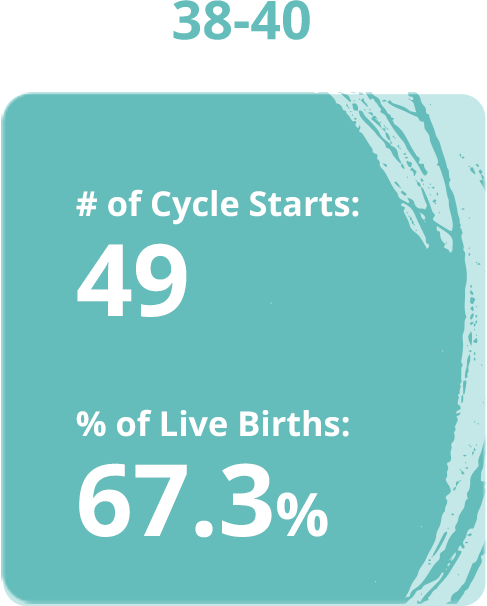
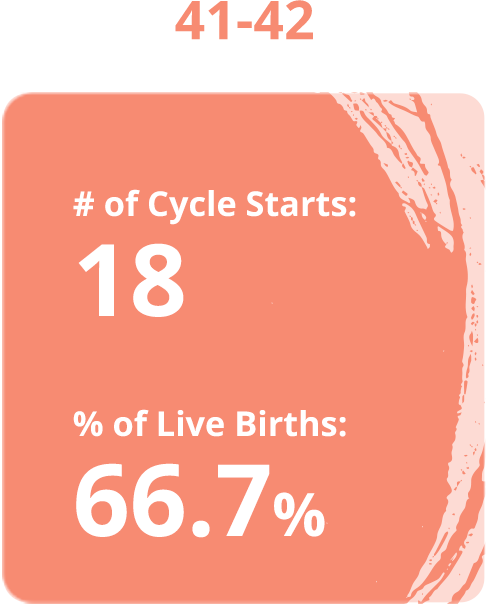
2024 Preliminary data as reported to the Society for Assisted Reproductive Technologies SART and the federal Centers for Disease Control and Prevention CDC.
Please note: A comparison of clinic success rates may not be meaningful because patient medical characteristics, treatment approaches and entry criteria for SART may vary from clinic to clinic. Learn more about Reach's SART data.
IVF PATIENTS
1st Transfers
All Ages
IVF PATIENTS
All Transfers
All Ages
Ongoing Pregnancy: The ongoing pregnancy rate represents the number of patients who are still pregnant, have "graduated" our program, and are now under the care of their OB-GYN. This number will always be lower than the clinical pregnancy rate due to the possibility of miscarriage. The ongoing pregnancy/live birth delivery rate is the most important number to Reach Fertility, as we define success in the same way you do - taking home a baby.
CLINICAL RESEARCH
Pregnancies
Reach Fertility is committed to transparency and provides patients with detailed information about our pregnancy success rates based on real-time clinical data. It's important to understand that these differ from live birth rates published on SART.org. The Society for Assisted Reproductive Technology (SART) reports live birth outcomes across the entire IVF process.